
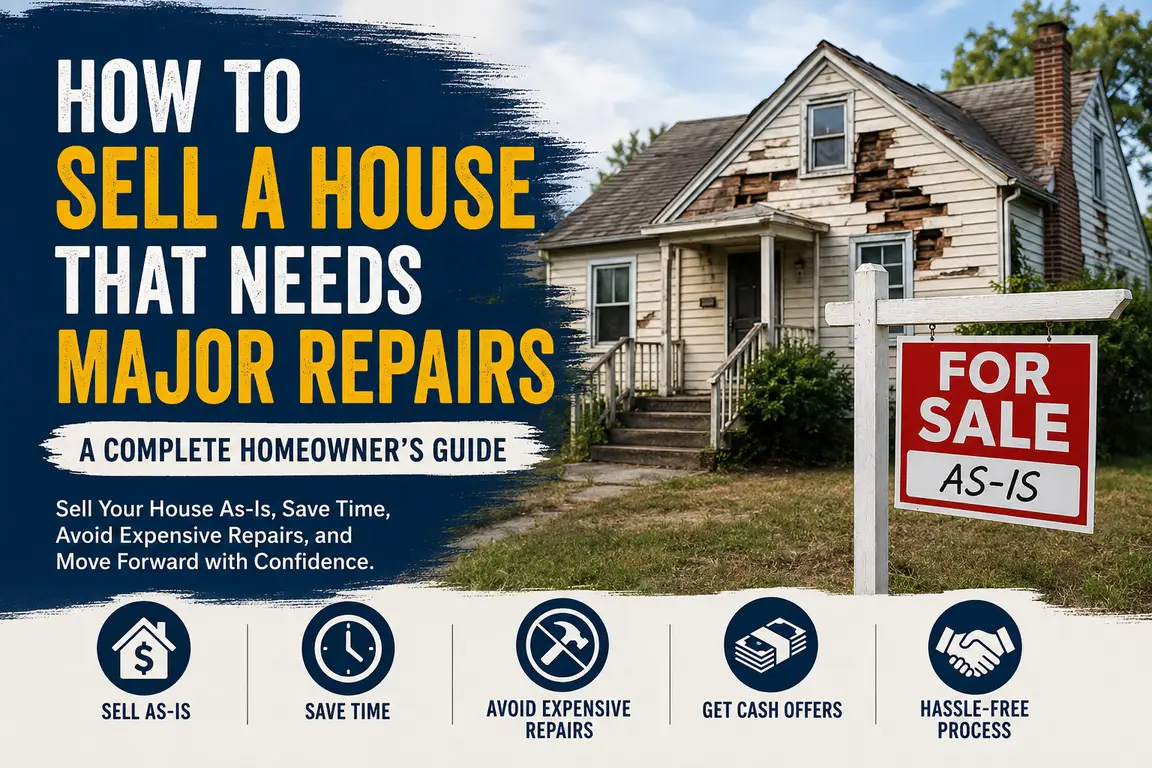
If you’re wondering how to sell a house that needs major repairs, understanding your options can help you compare repair costs and decide whether to sell as-is or make improvements before listing. Whether you’re dealing with an aging roof, outdated plumbing, electrical problems, or structural damage, you may wonder if buyers will still be interested in your home.
The good news is that you don’t always have to spend thousands of dollars fixing every issue before putting your property on the market. In many cases, you can sell your house in its current condition.
Many buyers, including real estate investors and cash home buyers, look for properties that need work. Understanding your options can help you avoid unnecessary expenses and choose a selling strategy that fits your budget and timeline.
In this guide, you’ll learn how to sell a house that needs repairs, when it makes sense to complete repairs, when selling as-is may be the better choice, and how to find the right buyer for your property.
What Counts as Major Repairs When Selling a House?
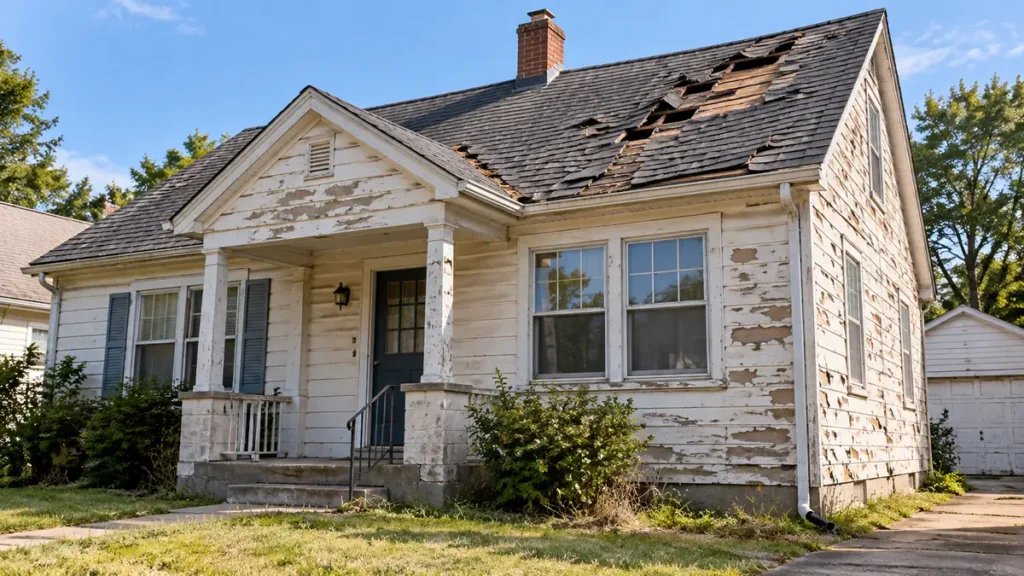
Not every repair has the same impact on a home sale. Small cosmetic issues, such as chipped paint or worn carpet, usually won’t stop buyers from making an offer. Major repairs, however, can affect your home’s value, financing options, and the number of interested buyers.
Here are some common problems homeowners may face before selling.
Foundation Problems
Foundation issues can include cracks, uneven floors, sticking doors, or shifting walls. Because these problems may require expensive professional repairs, buyers often consider them when deciding whether to make an offer.
Roof Damage
A leaking or aging roof can reduce buyer confidence. Missing shingles, water leaks, and storm damage may appear in a home inspection report and affect negotiations.
Plumbing Issues
Leaking pipes, broken sewer lines, and outdated plumbing systems can be expensive to repair. Buyers may factor these costs into their offers.
Electrical Problems
Faulty wiring, outdated electrical panels, and other electrical issues can create safety concerns. Depending on the property and financing requirements, some problems may need to be addressed before closing.
HVAC System Failure
Replacing a furnace or air conditioning system can be costly. Buyers may consider the expense of replacing a system that no longer works properly.
Water Damage and Mold
Water damage can lead to mold growth, stained ceilings, damaged flooring, and weakened materials. Known problems should be disclosed as required by applicable law.
Structural Damage
Problems involving load-bearing walls, support beams, or framing may require professional evaluation. Structural damage can make buyers cautious because repairs may be complex and expensive.
Understanding your property’s condition before selling helps you prepare for buyer questions and make informed decisions.
Can You Sell a House That Needs Major Repairs?
Yes. You can sell a house that needs major repairs, although the process and disclosure requirements depend on your location and circumstances.
Some buyers prefer move-in-ready properties, while others look for homes they can renovate. If you’re selling a house that needs repairs, you generally have three options.
Sell the Home As-Is
Selling as-is means offering the property in its current condition without agreeing to complete repairs as part of the sale. Buyers may still inspect the property, negotiate the price, or request other terms.
Although an as-is offer may be lower than the price of a fully renovated home, this approach can help you avoid spending money on extensive improvements.
Complete Selected Repairs
You could address a few important issues instead of renovating the entire property. Fixing certain safety concerns or problems that affect financing may make the home more attractive to some buyers.
Sell Directly to a Cash Buyer
Cash home buyers may purchase properties that need significant repairs. Depending on the buyer and transaction, selling directly may reduce the need to prepare the property for a traditional listing.
If you’re wondering how to sell your house when you don’t have the budget for major improvements, compare this option with a traditional sale before deciding.
Your best choice depends on your home’s condition, financial goals, and how quickly you want to sell. You can also learn more about our Sell Your House Fast process.
Should You Repair Your Home Before Selling?
Whether you should make repairs before selling depends on your budget, timeline, and the likely return on your investment.
Some improvements can attract more buyers or help your home sell for a better price. However, expensive renovations don’t always recover their full cost at closing.
Consider the Cost of Repairs
Foundation work, roof replacement, plumbing upgrades, electrical repairs, and HVAC replacements can cost thousands of dollars.
Before spending money, compare the estimated repair costs with the potential increase in your home’s selling price. Consider getting professional estimates so you can make an informed decision.
Think About Your Timeline
If you need to relocate, settle an estate, or move after a major life change, waiting months for contractors to complete repairs may not be practical.
Selling your house as-is may help you avoid renovation delays and move forward sooner.
Understand Your Local Market
Buyer expectations vary by market and property type. In some areas, buyers may be willing to take on a renovation project. In others, homes needing significant repairs may attract fewer offers or require a lower asking price.
Compare similar properties and consider the demand for homes in their current condition before deciding which route to take.
When Selling As-Is Makes Sense
Selling as-is may be worth considering if:
- You don’t have the budget for major repairs.
- The estimated repair costs are extensive.
- You need to sell within a limited timeframe.
- You’ve inherited a property that needs work.
- The home has been vacant for an extended period.
- You want to avoid managing contractors and renovations.
Compare the potential costs, proceeds, and responsibilities of each option before making your decision.
How to Sell a House That Needs Major Repairs
Selling a home with significant damage requires careful planning. Before putting the property on the market, consider its current condition, the likely cost of repairs, and the types of buyers who may be interested in purchasing it.
Step 1: Evaluate Your Home’s Condition
Start by making a list of known problems, such as:
- Roof leaks
- Plumbing problems
- Electrical issues
- Foundation cracks
- HVAC problems
- Water damage or mold
- Structural concerns
A professional property condition assessment may help you understand the work involved. You can also consider a property condition report when you need more detailed information about the home’s condition.
Step 2: Decide Whether to Repair or Sell As-Is
Consider these questions:
- Can I afford the necessary repairs?
- Will the improvements likely increase the selling price enough to justify their cost?
- Do I have time to complete renovations?
- Am I comfortable managing contractors?
If the costs or time involved aren’t practical, selling your home without repairs may be a reasonable alternative.
Step 3: Set a Realistic Asking Price
Pricing matters when selling a property that needs work. An asking price that doesn’t reflect the home’s condition may discourage buyers and keep the property on the market longer.
Consider the home’s current condition, comparable properties, estimated repair costs, and buyer demand. A realistic price can help attract qualified buyers.
Step 4: Gather Repair Estimates
Even if you don’t plan to make repairs, estimates can help you understand the likely costs. They may also help you answer buyer questions and explain how you arrived at your asking price.
You don’t necessarily need to complete every repair before selling, but understanding the potential expenses can help you evaluate offers.
Step 5: Be Honest About Known Problems
Disclose known material defects as required by applicable law. Complete any required property condition disclosure statement accurately and provide relevant information to prospective buyers.
Hiding known problems can lead to disputes and legal complications. If you’re unsure about your disclosure obligations, consult a qualified real estate professional or attorney familiar with the laws in your area.
For additional guidance, you can review Rocket Mortgage’s home-selling resources.
Step 6: Market the Home to the Right Buyers
Not every buyer wants a fully renovated property. Some buyers specifically look for fixer-uppers, renovation projects, and homes with investment potential.
Highlight genuine strengths such as the location, lot size, layout, or potential for improvement. Describe the property’s condition accurately so buyers understand what they’re considering.
Step 7: Consider Selling to a Cash Home Buyer
If your home needs expensive repairs and you want to avoid the traditional selling process, a cash home buyer may be an option worth exploring.
Depending on the buyer and transaction, you may be able to sell without completing major renovations, preparing the home for extensive showings, or waiting for a buyer’s mortgage approval.
For homeowners facing costly repairs or tight timelines, compare the proposed offer and closing terms with other available selling options.
You can visit our How It Works page to learn about TurnPro Home Buyers’ process.
Selling a Fixer-Upper House: What Buyers Look For
A fixer-upper isn’t necessarily impossible to sell. Some buyers look for properties they can renovate to suit their needs or investment plans.
If you’re selling a fixer-upper house, focus on buyers who understand the property’s current condition and are prepared to take on the required work.
A fixer-upper may have attractive features such as:
- A desirable location
- A spacious floor plan
- A large lot
- Investment potential
- Access to schools, shopping, or major roads
Price Your Home Realistically
Buyers often compare a property’s asking price with similar homes and estimate the cost of repairs. Setting a price that reflects the home’s current condition can help attract serious offers.
Be Transparent About Repairs
Explain known problems and provide available inspection reports or repair estimates when appropriate. Transparency helps buyers understand the property and make informed decisions.
Whether you’re learning how to sell a fixer-upper or how to sell a fixer-upper house quickly, honest communication can make the process smoother.
Selling a House in Poor Condition
Selling a house in poor condition can be challenging, but significant damage doesn’t automatically mean you cannot sell the property.
A home may be considered in poor condition if it has:
- An aging roof
- Outdated kitchens or bathrooms
- Damaged flooring
- Water stains
- Broken windows
- Electrical or plumbing problems
- Structural damage
- Deferred maintenance
These problems may affect the home’s market value, but the impact depends on their severity and the property’s other features.
Focus on What You Can Control
Even if you’re not planning major renovations, simple improvements may help create a better first impression.
Consider removing clutter, cleaning the home, mowing the lawn, trimming bushes, and removing unwanted items. These steps can make the property more presentable without requiring a large investment.
Market the Home Honestly
When selling a house in poor condition, describe the property accurately. Highlight its genuine strengths while being transparent about known issues.
This helps attract buyers who understand the home’s condition and are prepared to evaluate the work involved.
What Is a Distressed Property?
A distressed property is a home facing physical or financial challenges that may complicate a traditional sale.
Examples include:
- Homes needing major repairs
- Vacant properties
- Inherited homes
- Properties facing foreclosure
- Fire- or storm-damaged homes
- Homes with significant deferred maintenance
The meaning of a distressed property can vary depending on the context. The term may describe the property’s physical condition, the owner’s financial circumstances, or both.
Owning a distressed property doesn’t automatically mean you cannot sell it. The available options depend on the property’s condition, any financial or legal obligations, and your goals.
Selling a Distressed Property
Options may include listing with a real estate agent, completing selected repairs, selling the property as-is, or contacting a cash home buyer.
Compare the expected proceeds, expenses, timeline, and responsibilities associated with each option. If completing repairs isn’t practical, an as-is sale may be worth considering.
Why Many Homeowners Choose Cash Home Buyers
When a home requires major repairs, some traditional buyers may request repairs or have difficulty obtaining financing for the property. Cash buyers may be more flexible about purchasing homes that need work.

Selling directly to a cash buyer may offer advantages such as:
- No need to complete major renovations before making the sale
- Potentially fewer repair-related negotiations
- A process that may involve fewer financing-related delays
- A potentially simpler selling experience
The exact terms, closing timeline, and costs depend on the buyer and transaction, so review any offer carefully before accepting it.
For homeowners dealing with costly repairs, inherited properties, or an urgent move, choosing to sell your house as-is may be worth comparing with a traditional sale.
Every homeowner’s situation is different, so it’s important to evaluate all available options.
If you’d like to learn more about other homeowners’ experiences, visit our Reviews page.
Ready to Sell a House That Needs Major Repairs?
If your home needs major repairs, you may not have to renovate it before selling. TurnPro Home Buyers can help you explore selling your property in its current condition. Discuss your situation with our team and learn about your selling options.
Common Mistakes to Avoid When Selling a House That Needs Major Repairs
Avoiding common mistakes can help you make a more informed decision and reduce unnecessary expenses.
Overpricing the Property
Pricing a home too high can discourage buyers. Consider the home’s condition, comparable properties, and estimated repair costs when deciding on an asking price.
Spending Too Much on Repairs
Not every repair will increase the home’s value enough to recover its cost. Before investing in renovations, compare the likely financial return with the option of selling as-is.
Hiding Known Problems
Disclose known defects as required by law. Transparency can help reduce misunderstandings and disputes during the selling process.
Ignoring Basic Presentation
You may not need a complete renovation to make a better first impression. Cleaning the property, removing clutter, and maintaining the exterior can help buyers assess the home.
Accepting the First Offer Without Comparing Options
Review offers based on more than the purchase price. Consider closing terms, contingencies, repair requests, costs, and the expected timeline before deciding.
Frequently Asked Questions
Can I sell a house that needs major repairs?
Yes. You may be able to sell through a real estate agent or directly to a cash home buyer. Your options depend on the property, applicable disclosure requirements, and the terms of the transaction.
Should I repair my house before selling it?
It depends on your budget, timeline, property condition, and expected return on investment. If repairs are expensive or you need to sell quickly, selling as-is may be worth considering.
Can I sell my house without making repairs?
Yes. Some buyers purchase homes in their current condition. Compare offers and selling costs to determine whether an as-is sale suits your circumstances.
Will major repairs reduce my home’s value?
Major repairs may affect a home’s value because buyers consider the cost and effort required to address them. The effect depends on the property’s condition, location, and local market.
Who buys houses that need major repairs?
Potential buyers include real estate investors, cash home buyers, renovation specialists, and some individual buyers. Each buyer may have different requirements and offer terms.
Final Thoughts
Selling a home that needs major repairs may seem overwhelming, but you have options. Whether your property has structural issues, outdated systems, or years of deferred maintenance, you don’t always have to invest in expensive renovations before selling.
By understanding your home’s condition, comparing repair costs, and evaluating different selling strategies, you can make a decision that fits your financial goals and timeline.
For some homeowners, selling as-is may be a practical alternative to managing extensive repairs. The right choice depends on the property, available offers, and your individual circumstances.
If you’re considering selling a home that needs repairs, TurnPro Home Buyers can help you explore your options. Contact our team to discuss your property and request a no-obligation cash offer.
Contact TurnPro Home Buyers to learn more about the available options for your home.