
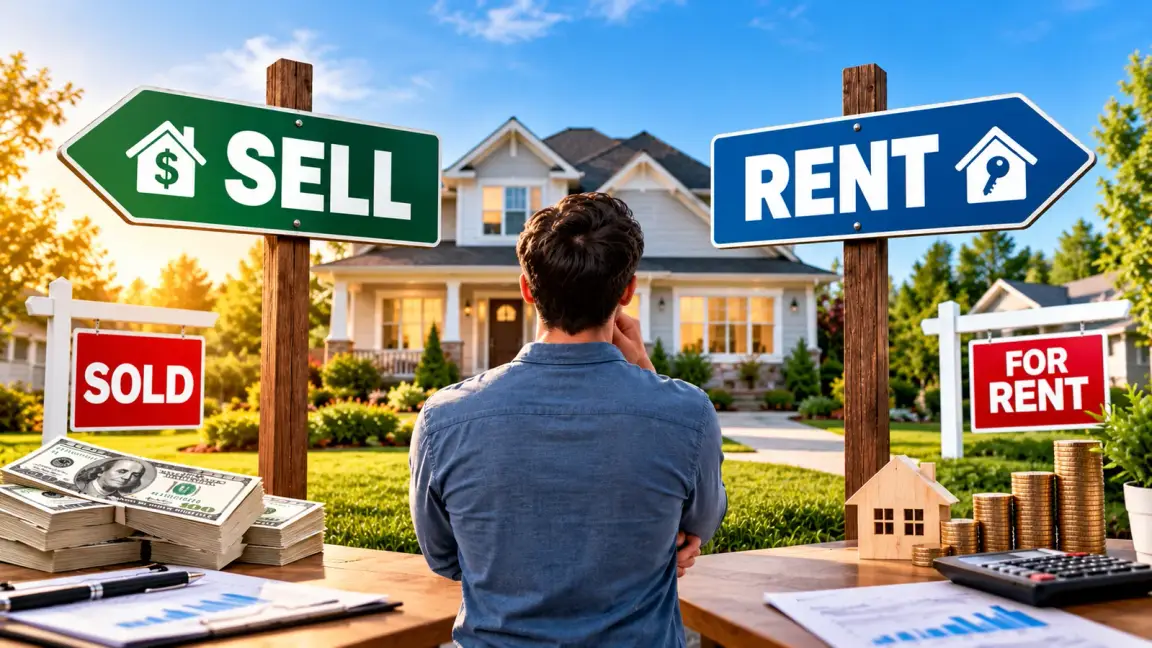
Should I sell my house or rent it out? If you’re facing this decision, you’re not alone. Deciding whether to sell your house or rent it out depends on your financial situation, property condition, potential rental income, and long-term goals. Maybe you’re moving to a new home, relocating for work, dealing with an inherited property, or considering turning your house into a rental property.
Both selling your house and renting it out have potential benefits, depending on your financial situation and long-term goals. Renting may provide ongoing income and allow you to keep the property as a long-term investment. Selling can give you access to your home equity, eliminate ongoing ownership responsibilities, and help you move on without managing a rental.
The right decision depends on your financial situation, the condition of your property, local rental demand, and how much time you’re willing to spend managing a home. Here’s how to compare your options and decide which makes the most sense for you.
Is It Better to Sell Your House or Rent It Out?
There isn’t one answer that works for every homeowner. Renting may make sense if your property can generate enough income to cover its expenses and you want to hold it as an investment. Selling may be a better fit if you need cash, want to avoid landlord responsibilities, or don’t want to spend money maintaining the property.
Before deciding, consider these questions:
- Can the expected rent cover your mortgage and other property expenses?
- Will you have enough money available for unexpected repairs?
- Do you want to manage tenants and rental agreements?
- Would selling help you meet your current financial goals?
- How long do you realistically want to keep the property?
Comparing the costs of selling your house with the potential income and responsibilities
1. How Much Rental Income Could Your House Generate?
Rental income is often the first thing homeowners consider when deciding whether to sell or rent out a house. However, the amount you collect from a tenant isn’t the same as your profit.
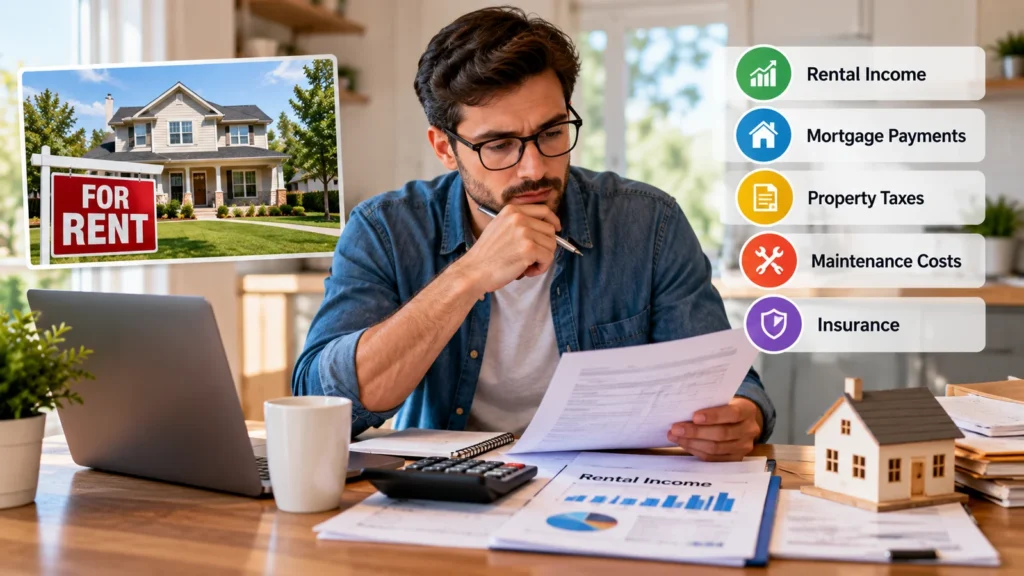
Start by researching rental prices for similar properties in your area. Look at homes with comparable sizes, features, conditions, and locations to estimate what tenants might reasonably pay.
Next, calculate your likely monthly expenses, including:
- Mortgage payments, if applicable
- Property taxes
- Homeowners insurance and any required landlord coverage
- Routine maintenance and repairs
- Property management fees, if you hire a manager
- Homeowners association fees, where applicable
- Utilities you agree to cover
- Periods when the property is vacant
For example, imagine your house could rent for $2,200 per month. If your average monthly ownership and operating expenses total $1,850, you would have $350 left before accounting for unexpected expenses, taxes on rental income, and other potential costs.
That difference matters. A property that looks profitable based on rent alone may produce much less income after all expenses are considered.
Tip: Estimate your rental income conservatively. Allow for vacancies and unexpected repairs instead of assuming you’ll have a tenant paying rent every month.
2. What Are the Costs of Renting Out a House?
Being a landlord involves more than collecting rent. Even a well-maintained property can require ongoing spending, and larger repairs can quickly reduce your rental profits.
Consider the age and condition of your roof, plumbing, electrical systems, heating and cooling equipment, and other major components. If your home needs substantial work before someone can move in, calculate those costs before committing to renting it out.
You should also consider the time involved in finding tenants, preparing a lease, responding to maintenance requests, collecting rent, and addressing problems that arise during a tenancy.
Hiring a property manager can reduce your day-to-day workload, but management services typically come with a fee.
Rental income may also have tax implications. The IRS explains rental income and deductible expenses in its Residential Rental Property guide. Consider consulting a qualified tax professional about your particular circumstances.
If renting the property requires more money, time, and effort than you expected, selling may be worth considering.
3. How Much Money Could You Receive by Selling?

Selling your house can turn your ownership stake into cash that you can use for another home, pay down debt, fund a move, or pursue other financial goals.
However, the sale price isn’t necessarily the amount you’ll receive.
To estimate your potential proceeds, start with your home’s likely selling price. Then subtract the costs associated with the transaction, such as any remaining mortgage balance, applicable closing costs, and real estate commissions if you use an agent.
For example, suppose your house sells for $300,000 and you still owe $170,000 on your mortgage. Before selling expenses and other applicable costs, the difference is $130,000.
This is an illustration, not a prediction of your home’s value or the amount you would receive.
Your actual proceeds depend on your property’s value, mortgage payoff amount, transaction expenses, and other circumstances.
If you want to sell, it’s worth comparing the likely proceeds with the amount you could realistically earn from renting the property over time. That comparison can help you understand what you’re giving up and what you stand to gain with each option.
4. Do You Want the Responsibility of Being a Landlord?
One of the biggest differences between selling and renting is the level of responsibility involved.
When you rent out your house, you generally remain responsible for maintaining the property and meeting applicable landlord obligations. You’ll also need to understand local rules concerning leases, security deposits, habitability, tenant rights, and required notices.
Some homeowners enjoy managing rental properties. Others find that tenant communication, repairs, and unexpected expenses become a burden.
Think about your current lifestyle and future plans.
If you’re moving far away, managing a property may be more complicated. If you have a demanding job or simply don’t want another responsibility, renting may not be the right fit.
Selling can eliminate the ongoing responsibilities associated with ownership once the transaction is complete. That may be especially appealing if you want a simpler transition to your next home or stage of life.
5. What Is the Condition of Your House?
Your home’s condition can have a major influence on whether renting or selling makes more sense.
If the property is in good condition and requires little work before a tenant can move in, renting may be easier to pursue. If it needs significant repairs, you’ll need to determine whether the expected rental income justifies the upfront investment.
Before making a decision, consider the cost of:
- Roof repairs or replacement
- Plumbing or electrical work
- Heating and cooling repairs
- Flooring, painting, or other improvements
- Safety-related repairs and required updates
You don’t necessarily need to renovate every part of a house before selling it. Depending on the property and the buyer, selling in its current condition may be an option.
TurnPro Home Buyers purchases houses in North and South Carolina, including properties that may need repairs. If your home needs work and you don’t want to prepare it for tenants or invest in renovations, you can learn more about our home-buying process.
6. Do You Want to Keep the Property as a Long-Term Investment?
Renting out your house may allow you to retain ownership while earning income from tenants. You may also benefit if the property’s value increases over time, although appreciation is never guaranteed.
However, keeping a property means accepting the risks and costs that come with ownership. Rental demand can change, tenants may leave, repairs can be expensive, and property values can rise or fall.
Selling provides a different kind of flexibility. You can access your available equity without continuing to manage the property, although the sale will involve transaction costs and may have tax consequences depending on your circumstances.
Ask yourself whether you genuinely want to own a rental property or whether you’re considering renting simply because selling feels like a difficult decision.
If you want to build a rental portfolio and have the financial resources to manage it, keeping the house could fit your plans. If you would rather use your money elsewhere, selling may be more practical.
7. When Does Selling Make More Sense Than Renting?
Selling may be worth considering if one or more of these situations apply to you:
- You need access to your equity. Selling may provide funds for another home, a move, or other financial priorities.
- The rental numbers don’t work. If realistic rental income won’t cover your expenses, keeping the property may strain your finances.
- The house needs expensive repairs. You may prefer to avoid investing additional money before renting it out.
- You don’t want to manage tenants. Landlord responsibilities can require considerable time and attention.
- You want to simplify your finances. Selling can eliminate future property expenses and ownership responsibilities after closing.
- You need a more straightforward sale. If preparing a house for the rental market isn’t appealing, you may want to explore selling options instead.
Your decision should be based on your actual numbers and circumstances, rather than the assumption that owning a rental property is always more profitable than selling.
8. Can You Sell Your House Without Fixing It Up?
Yes, selling a house in its current condition may be possible, depending on the property and the buyer. This can be worth exploring if the home needs repairs, you’re short on time, or you don’t want to spend money preparing it for tenants.
A traditional sale may involve preparing the property for showings, negotiating repairs, and waiting for a buyer’s financing and other conditions to be satisfied.
Selling directly to a cash home buyer is another option. The buyer evaluates the property’s condition and other relevant factors before making an offer. The offer and closing timeline will depend on the individual property and transaction.
TurnPro Home Buyers buys houses directly from homeowners, including properties that may need repairs. If you’re weighing the cost of fixing up your house against the potential income from renting it out, selling your property as-is may be an alternative worth considering.
The right choice depends on your financial situation, the property’s condition, and your long-term goals. Consider the potential costs and benefits of both options before deciding whether to sell or rent out your house.
Should You Sell Your House or Rent It Out? A Quick Comparison
| Consideration | Renting Out Your House | Selling Your House |
|---|---|---|
| Income | Potential ongoing rental income | Potential lump-sum proceeds |
| Expenses | Ongoing ownership and operating costs | Transaction costs associated with selling |
| Repairs | Landlord may need to handle ongoing repairs | Repair requirements depend on the sale and buyer |
| Time commitment | Tenant and property management | Time needed to complete the sale |
| Property ownership | You retain ownership | Ownership transfers after closing |
| Financial risk | Vacancy, repairs, and market changes | Sale price and transaction costs |
| Best suited for | Owners who want to retain and manage an investment | Owners who want to access equity or move on |
The best option depends on your financial goals, property condition, and willingness to take on ongoing responsibilities.
Frequently Asked Questions
Is it better financially to sell a house or rent it out?
It depends on the expected rental income, ongoing expenses, potential property appreciation, selling costs, and your financial goals. Compare realistic rental cash flow with estimated net sale proceeds before deciding.
Can I rent out my house if I still have a mortgage?
Often, yes, but you should review your mortgage agreement and insurance requirements before renting the property. Some loans or insurance policies may have occupancy or rental restrictions.
What if my house needs major repairs?
You can compare the cost of repairs with the potential rental income and the likely proceeds from selling. Depending on the property, selling in its current condition may be an option.
Should I rent out my house if I’m moving to another state?
It may work if the rental income supports the costs and you have a reliable plan for managing the property remotely. Consider hiring a property manager or selling if you don’t want the responsibility.
Can I get a cash offer instead of renting out my house?
Yes. You can contact a cash home buyer to discuss your property and request an offer. Review the amount, terms, and expected closing timeline before deciding whether to accept.
Final Thoughts: Should You Sell Your House or Rent It Out?
Deciding whether to sell your house or rent it out comes down to more than potential income. You need to consider expenses, property condition, your available time, and what you want to accomplish financially.
Renting may make sense if the numbers work and you want to remain a property owner. Selling may be a better fit if you need access to your equity, want to avoid landlord responsibilities, or prefer not to invest in repairs.
Take time to compare both options using realistic estimates. If you’re considering selling a house in North or South Carolina, TurnPro Home Buyers can help you explore a direct cash sale without the need to prepare the property for a traditional listing.
Ready to explore your options? Contact TurnPro Home Buyers to discuss your house and request a no-obligation cash offer.